
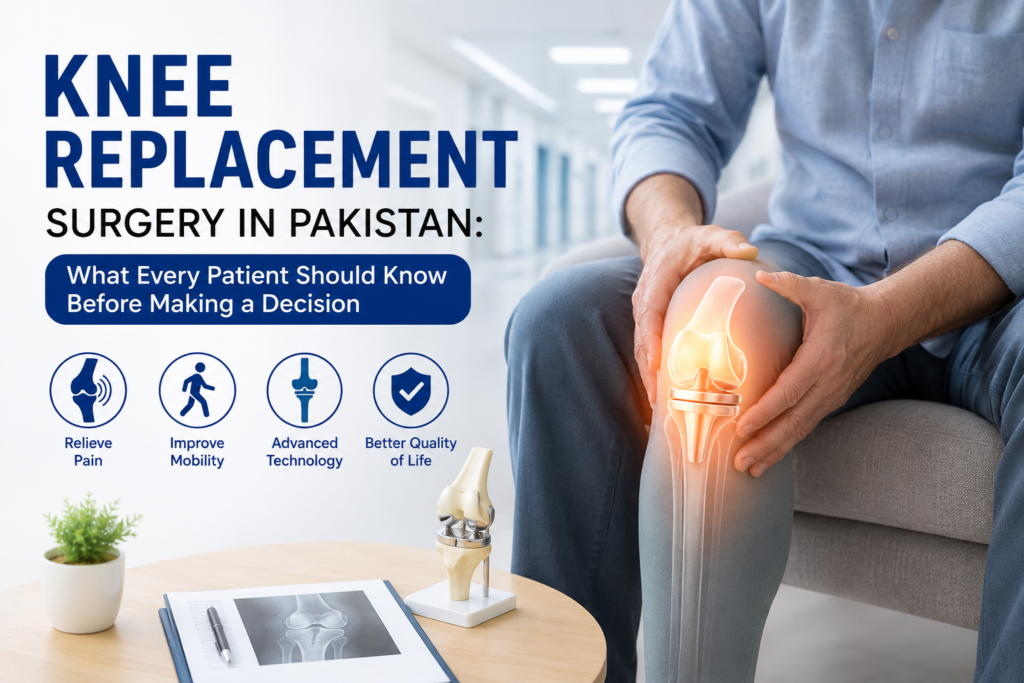
There is a particular kind of exhaustion that comes from living with a knee that no longer works the way it used to. It is not just the pain, though the pain is real. It is the small defeats that pile up quietly: skipping a grandchild’s wedding dance, avoiding the stairs at a friend’s house, sitting out of the family trip because you are not sure your knee will hold up. For thousands of families across the country, knee replacement surgery in Pakistan is not just a medical procedure. It is the difference between watching life happen and actually living it again.
If you or someone you love is weighing this decision right now, you are probably tired, a little scared, and overwhelmed by conflicting advice. That is completely normal. This guide is written to cut through the noise and give you an honest, practical look at what knee replacement surgery in Pakistan really involves, from the first warning signs to choosing the right surgeon.
Understanding When You Need Knee Replacement Surgery in Pakistan
Not every knee pain means surgery. Many patients try physiotherapy, weight management, and medication first, and rightly so. But there comes a point for people with advanced osteoarthritis or severe joint damage where these options simply stop working, and surgery becomes the only path back to a normal life.
Signs Your Knees Are Telling You Something
A few warning signs tend to show up again and again in patients who eventually choose knee replacement surgery in Pakistan:
- Pain that disturbs your sleep, night after night
- Stiffness that makes it hard to get out of bed or a chair
- A visible change in the shape of the knee, or a bowed leg
- Reduced mobility that keeps you from walking even short distances
- Pain that no longer responds to medicine or rest
If this sounds familiar, it may be time to have an honest conversation with an orthopaedic specialist rather than continuing to push through the discomfort.
The Real Cost of Knee Replacement Surgery in Pakistan
This is usually the question families ask first, and understandably so. The cost of knee replacement surgery in Pakistan varies quite a bit depending on the hospital, the surgeon’s experience, the implant brand chosen, and the city where the procedure takes place. Prices in Lahore, Karachi, and Islamabad can differ significantly even for the same procedure, and two hospitals sitting a few kilometres apart can quote very different figures for what looks like the same package.
Why the Prices Vary So Much
A large part of the confusion comes from how packages are presented. Some quotes include the implant, hospital stay, and physiotherapy, while others only cover the surgeon’s fee and leave the rest as a surprise later. Families often discover hidden charges only after admission, at a point when it feels too late to negotiate or walk away. This is exactly the kind of situation where independent, transparent guidance protects patients from being overcharged or misled during an already stressful time.
How to Choose the Right Surgeon
Choosing a surgeon is arguably the most important decision in this entire journey, yet it is often made under pressure, based on a single referral or a rushed hospital visit. A good surgeon should have real, demonstrable experience in joint replacement, a track record of successful outcomes, and the patience to answer your questions without rushing you out the door.
Questions You Should Never Be Afraid to Ask
Before agreeing to any procedure, it helps to ask direct questions:
- How many similar surgeries has the surgeon performed?
- What implant is being recommended, and why?
- What does the total cost actually include?
- What does recovery typically look like for someone your age and condition?
- Is there a plan in place if complications arise?
A confident, experienced surgeon will welcome these questions rather than avoid them.

What Happens Before, During, and After Surgery
Preparation usually begins with a detailed assessment, including X-rays and blood work, to confirm that surgery is the right path. The procedure itself typically takes one to two hours, performed under anaesthesia by a qualified orthopaedic team. Most patients are encouraged to stand and take a few steps within a day or two, which often surprises people who expect a much longer period of complete immobility.
Recovery is a gradual process. Physiotherapy plays a central role in regaining strength and range of motion, and most patients see steady improvement over six to twelve weeks, with continued progress for several months afterward. Patience during this phase matters just as much as the surgery itself.
Why Independent Guidance Matters During Knee Replacement Surgery in Pakistan
Here is something patients rarely hear until it is too late: hospitals and individual surgeons are, understandably, focused on their own recommendations. That does not make them dishonest, but it does mean patients rarely get a truly independent second opinion comparing options across different hospitals and specialists.
This is where a dedicated patient advocate becomes valuable. Rather than being tied to any single hospital or surgeon, an independent advocate reviews your reports, explains your options in plain language, compares realistic costs across multiple setups, and helps you choose a path based on what is genuinely best for you, not what is most convenient for a clinic’s schedule. For anyone researching knee replacement surgery in Pakistan, this kind of unbiased support can mean the difference between a stressful, confusing experience and a confident, well-informed decision.
Final Thoughts
Deciding to move forward with knee replacement surgery in Pakistan is rarely easy. It involves weighing pain against risk, cost against quality, and hope against uncertainty. But with the right information and the right people guiding you, it does not have to feel like a gamble.
If you are still unsure where to start, reaching out for an honest, no-pressure conversation is often the best first step. A clear explanation of your options, realistic cost expectations, and a trustworthy surgeon recommendation can turn an overwhelming decision into a manageable one and get you back to the life you have been missing.